Launches · September 27, 2026 · 15 min read
Meta’s September 23 recap puts Muse on AI glasses in the coming months and introduces a pocket device called Charm, while the screen size, the modem, and a December sale date come from reporters at the event.

Connect was September 23 at Meta’s headquarters in Menlo Park. The recap the company published that day is a catalogue. Muse, the agent Meta launched on September 8, is scheduled for the company’s AI glasses in the coming months. A pocket device called Muse Charm gets one short paragraph, with more promised later this year. The research note posted the same day describes an avatar system and a timed comparison against two commercial products. The download figures people have been repeating are older than the event. They are Apptopia estimates, reported by TechCrunch on September 21, for the first 12 days after launch. Meta has not published its own.
What the September 23 page schedules
The recap says Muse can already be reached in the Muse app, on WhatsApp, on the web, and in a Mac app that can manage messages and find old files. The new Mac claim is computer use. With permission, Muse can drive any app on the machine. Meta says you can leave the computer and the agent keeps working through the tasks already lined up.
Voice is described as a long conversation, with work continuing in the background while the person is still talking. The voice itself can be set by a description: faster, slower, or a named accent. Muse is also getting an email address of its own, for tasks, or as another way to write to the agent. The page does not show an address, a domain, or a date.
On the glasses, the schedule is “in the coming months.” Muse is meant to start when the wearer says the agent’s name. Meta says it can act on what the person is looking at, so the wearer does not have to describe the scene. The examples on the page are a product on a shelf, a flier on a wall, and a long list of school supplies. Models, countries, and a month are not named.
Partners get a more specific treatment, split between what Meta says was already live and what it is adding. Muse launched with dozens of partners and access to the Shopify catalogue. For shopping, the recap adds Walmart, Best Buy, American Eagle Outfitters, Dick’s Sporting Goods, Fanatics, Gap, Michael Kors, Sephora, Ulta, and Wayfair, plus Shop Pay and PayPal for payment. Expedia is described as coming soon, for travel. Instacart is named for grocery orders. For work, the names are Notion, Granola, GitHub, and Box. The page says more partners are coming. It does not say which of the new names accept an order on September 23 and which are a plan. Amazon is not on the list.
Charm is a paragraph on that page
Meta’s own description of Muse Charm is short. It calls the device fun, says it is for talking to Muse, says it puts a real-time voice model in something that fits in a pocket, and says there will be more to share later this year. There is no price, no screen size, no radio, no battery figure, and no weight.
The detail sits in the reporting from the room. Axios quotes Mark Zuckerberg at the event: “We’ve packed a lot of technology in this little guy.” He then told the audience that if they are not wearing glasses, Charm is “by far the fastest way to talk to your Muse and to show them what’s going on around you.” Axios says the device will be available for purchase by December, and that Meta would not be more specific than “in the coming months” about the glasses.
Reuters, filing from Menlo Park on September 23, describes a screen of about 2 inches, or 5 centimetres, worked with a thumb, and a Muse character in the middle that can be changed. A built-in 5G modem is there so the device can reach Muse without Wi-Fi. Reuters says it cannot make calls. The point of the tap, in that account, is to open Muse without going through an AI app on a phone.
Bloomberg’s report, as The Verge relayed it the next day, adds a two-inch OLED touchscreen, a new operating system, and a fingerprint sensor used to start a session. Cameras are described both for photos and video and for giving Muse a view of the room. The report also lists speakers, microphones, a USB-C port, music and video playback, and setup through the Muse app on iOS or Android. Bloomberg’s account, as The Verge relays it, says one Charm can recognize other Charms nearby and interact with them. Zuckerberg’s line in that piece is that the launch is “in time for the holidays in December.” He did not give a price. Bloomberg’s sources told the reporter the device will likely cost about as much as a smartwatch, and that Meta has not settled what a carrier will charge for the 5G connection.
None of that hardware list is on the Connect recap. A reader who stays on Meta’s page knows the object exists, that it talks, and that it fits in a pocket.
Zuckerberg also used the keynote, in Reuters’s account, to mark a change in what the company is building toward. He said personal superintelligence “will not only come first; it will be much bigger and more important,” that Meta has shifted toward devices for that, and that Muse would soon be on the smart glasses lineup. Reuters sets Charm next to the Rabbit R1, a handheld from 2024 with a screen and a button that drew a crowd and then failed to do what it had promised. That comparison is the reporter’s, not a line from Meta’s recap.
The glasses list has prices the pocket device does not
By the end of the year, Meta says, there will be more than 100 styles of AI glasses. Ray-Ban, Oakley, and Meta’s own frames are all inside that count.
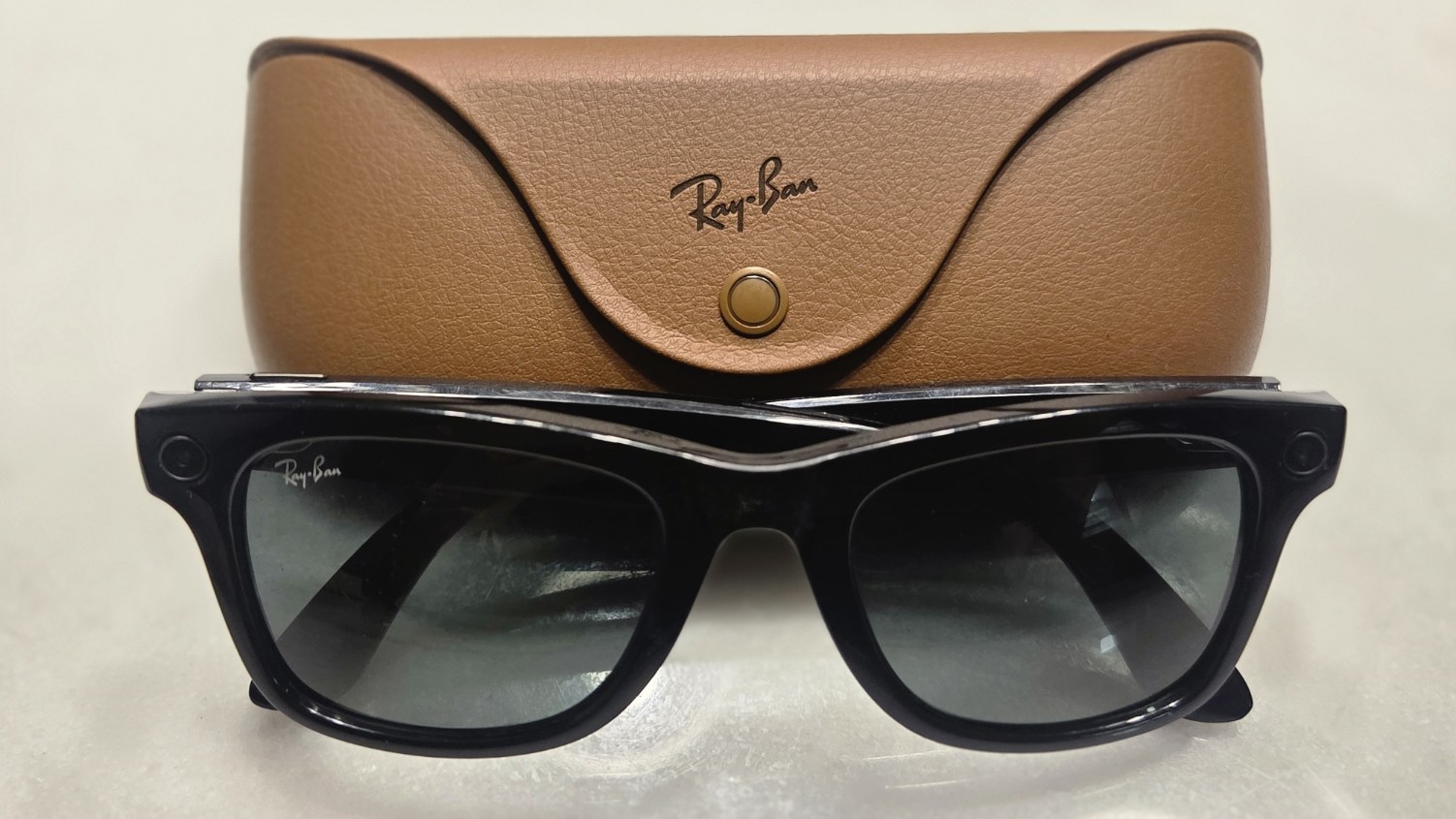
The new audio pair is the Ray-Ban Meta Audio glasses. Meta calls them its first audio glasses, with open-ear sound and AI in the frame, aimed at people who want to wear them all day. Two styles are named, Clubmaster and Burbank. Battery life on the page is 12 hours. They take a wide range of optical prescriptions. Meta calls them the slimmest and lightest frames it has made in this line. Sound and the assistant are the pitch. Cameras are the point of the older Ray-Ban Meta glasses, and of the Gen 3 pair below, and this section never mentions one.
Ray-Ban Meta Gen 3 is described as the next version of what Meta calls the world’s bestselling AI glasses. The changes on the page are a slimmer fit, an action button for quicker access to Meta AI, and the longest battery life of any Ray-Ban Meta model. Two new frame shapes are named, Aviator and Zena. The page does not give the hour count for that battery, a price, or a ship date of its own. “By the end of the year” is the date attached to the whole set of styles.
Other frame news is a list of names: an ivory color of the Meta Glasses associated with Kylie Jenner, a collaboration with Lisa, two more shapes called Meta Capri and Meta Nova, a lower-priced Meta Adventurer, and a limited Meta Fury sold only in Meta Lab stores at launch. In the United States, buyers can mix frame, lens, and case color. New markets for Meta Glasses start September 23 in Singapore, South Korea, and Mexico, with Brazil and the United Arab Emirates named as later.
Meta Ray-Ban Display, the pair with a screen, can be ordered online. It goes on sale September 23 in Canada and the United Kingdom. Pre-orders open the same day in France, Italy, and Germany, with availability on October 13. Those are the firm retail dates on the page.
Software for the glasses is grouped as “the coming months,” and a few items have a price or a country. Hearing enhancement is described as FDA-cleared software for adults 18 and older with perceived mild to moderate hearing loss. Setup is at home, with no clinic visit named. It launches in the United States later this year, at $149.99, and Meta says it can be paid with HSA or FSA money if the plan allows, or included with a Meta One subscription. Separate from that, wearers can shift audio toward one ear or send all of it to one side.
The same block lists hands-free guided workouts for running and cycling, nutrition tracking, and a shopping tool that identifies a product and can surface price and reviews, then set an alert or buy by voice. Capture adds Dolby Atmos on the recording. Walking directions can use a landmark, Meta’s example being a supermarket, in place of a street name. On Meta Ray-Ban Display, cycling and public-transit directions arrive later this month in the United States and Canada. A press-and-hold shortcut on the touchpad can be set to a tool the wearer uses often.
Meta VR Glasses are a different product, with a date and a price the Charm paragraph does not have. Spring 2027. $1,299.99. About 100 grams, which Meta says is five times lighter than a Quest 3. The battery and the processors sit in a puck clipped to a belt, a pocket, or a bag, so that weight stays off the face. Meta calls the panel a 5K Infinite Display built on micro-OLED. The wearer looks and gestures, without controllers. A table or desk can be used as a keyboard and a touchpad. Video apps named on the page are Disney+, YouTube, HBO Max, and Prime Video. A feature called hologram, made from a short self-capture on a phone, ships with the VR glasses. It also starts as an early access on WhatsApp for Meta Ray-Ban Display owners in the United States in the coming months.
Beat Saber gets what Meta calls its biggest update, the same spring, on the VR glasses and on Quest. The new mode is Flux. Hands are tracked, and the hands are the blades. The other titles named for hand tracking, playable without controllers on the VR glasses or with them on Quest, are Cardmada, Dice Throne Digital, Dragon Grove, Phoenix Wright: Ace Attorney – Dual Destinies, Supernatural, Tetris Effect: Mixed Realities, and Two Point Hospital.
Read against Charm, the pattern on the page is easy to see. Hearing help has a US price. The VR glasses have a season and a price. Display glasses have countries and an October 13 date. Charm, on this page, is later this year.
What the avatar test actually compared
The same day, Meta’s research group published “Bringing Your Muse to Life.” The subject is Muse Realtime Avatar. A still image, a full-body drawing, an animal, or an object is the reference. The system is supposed to keep that look while the character talks, and to carry the same face and habits from one turn of the conversation to the next. Meta says the examples in the post show what the model can do, and that they do not all match avatars offered in the Muse app. Muse is for users 18 and older.
The pipeline is one stream used twice. Muse Realtime Voice produces speech tokens that carry both the words and the delivery. An audio decoder turns those tokens into sound. The avatar model reads the same tokens and draws the performance, which is how the mouth is meant to stay with the voice. That model is a Diffusion Transformer. It takes the speech tokens, the reference image, and a short run of video it has already generated, and it does the work in small chunks. When a chunk is finished, the newest frames become the context for the next chunk, so the computation stays bounded while the call goes on.
Meta describes a large teacher model and a small student. The teacher uses 40 diffusion steps. At each step it runs three passes, for a form of guidance Meta calls three-way classifier-free guidance. That is 120 model evaluations per chunk. The student is trained to do the job in two unguided evaluations. Meta calls that a 60-fold cut. In the preference chart on the page, people split close to evenly between the student and the teacher, with the reported preference moving between 45 and 55 percent.
The comparison that matters for a buyer is the live one, against Runway Characters and HeyGen LiveAvatar. Raters used each product’s own live-call screen. They talked for two to three minutes. The avatar identities were matched across the systems. Meta says raters preferred Muse Realtime Avatar overall, 78 percent to 22 percent against Runway Characters and 88 percent to 12 percent against HeyGen LiveAvatar. The note says the preference held for facial expressivity, how natural the movement looked, lip sync, and whether the character stayed itself. On mannerisms against Runway, Meta says the result was not statistically distinguishable from a tie. The Rundown’s news item on Connect reports that mannerism result. It does not reprint the 78 and 88 figures. Those are in the research note.
Serving numbers in that note are narrower than a product announcement. Video comes out as a 448 by 768 portrait at 25 frames a second. Latency is about 870 milliseconds, measured from the end of the user’s turn to the first byte of the voice-and-video reply. On one Nvidia GB200, generating eight frames, which is 320 milliseconds of playback, takes 20 milliseconds, or about 2.5 milliseconds of model time per frame. Meta says the serving work raised capacity eightfold against a two-step baseline in BF16, and that one GB200 can hold 12 of these video sessions at once. Generated video is marked with Meta Video Seal, an invisible watermark Meta says does not add latency. The note does not say the avatar is on sale, on the glasses, or on Charm, or name the countries where a person can start one of these calls.
Twelve days, and whose numbers those are
TechCrunch’s September 21 story, by Sarah Perez, is the one that put Apptopia’s estimates into wide circulation. Apptopia does not have Meta’s internal counts. Meta, asked for comment, had not shared public figures. TechCrunch says as much.
Apptopia’s comparison, built so the two apps could be lined up, is iOS only, United States and Canada only, first 12 days. On that cut, Muse had 1.8 million downloads and ChatGPT had 1.3 million. The reason for the cut is the launches were not the same shape. ChatGPT’s mobile app arrived worldwide, and only on iOS. Muse arrived on the App Store and on Google Play, and only in the United States and Canada. A global Muse total is also in the story: 2.8 million installs in those 12 days. That 2.8 million is not the number set next to ChatGPT’s 1.3 million.
Daily use gets the same treatment. Apptopia’s estimate for Muse’s daily mobile users in the United States is 642,000, against 231,000 for ChatGPT at the same point after its own launch. Narrowed to iOS, so the Android phones in Muse’s number are not doing the work, Muse is at 359,000, still above ChatGPT’s figure from that period. TechCrunch also says Muse moved from No. 2 to No. 1 overall on the US App Store, citing Business Insider, and that Appfigures had separately said the app had passed 1 million downloads. A correction on the piece says an earlier version had put Appfigures’s name on data that came from Apptopia.
Apptopia’s other figure is about where the users already were. More than 95 percent of Muse’s users are also Facebook users, and 63 percent are Instagram users. That fits a company that can point its largest apps at a new one. It does not say whether the 642,000 daily users are still there a month later. Twelve days is the window in the table.
Reuters, on September 24, put a share-price move next to the same launch. Meta stock was up nearly 24 percent from September 8, up more than 3 percent on Thursday, good for about $56 billion of market value that day after about $324 billion added through Wednesday’s close. Those are trading figures. They are not a substitute for Meta’s own install report, which still is not public.
Amazon had already refused
Three days before Connect, Amazon said it had cut Muse off from shopping on Amazon.com. GeekWire’s Todd Bishop reported it from Sunday night, September 20, in a story timestamped early September 21 UTC. Amazon’s account is that it asked Meta to leave the store out of Muse, and that Meta did not. Amazon says it was not told Muse would use the site, that the agent does not identify itself while it browses, and that it appears to capture and store customer credentials.
The message GeekWire quotes from the site is specific: “Continued access by an unauthorized AI agent violates Amazon’s Conditions of Use, to which our customers have agreed.” Amazon’s spokesperson told the reporter that applications which buy on a customer’s behalf “should operate openly and respect service provider decisions about whether or not to participate,” and that Amazon had “requested that Meta remove Amazon from the experience.” Meta did not answer GeekWire that night. Amazon said it was in conversation with Meta, and it declined to say whether it would sue.
Meta’s earlier description of the same machinery, quoted in that story, is the other half. Muse “has no visibility into people’s passwords or payment methods.” Credentials a person shares “go into secure storage, so Muse can use them without seeing them, including passwords a person types into the browser themselves.” If a service has a public API, Muse connects with credentials the user provides. If it has no API, Meta says the agent “can use the service through a browser the way you would.” A separate check, which Meta calls Sentinel, has to approve anything Muse sends out to the internet. The user is asked before a sensitive step such as a purchase or an email. Amazon’s complaint is aimed at that browser path: an agent that does not announce itself, moving through a logged-in store.
GeekWire notes the companies already do business. Amazon products have been buyable inside Facebook and Instagram since 2023, and in April Meta agreed to run agent workloads on Amazon’s Graviton chips, a deal GeekWire describes as multibillion-dollar. The retailer has also spent the year trying to keep other agents off the site, including a lawsuit against Perplexity over the Comet browser. A March injunction was lifted on August 4, when the Ninth Circuit said the user was the party reaching Amazon’s computers under the federal anti-hacking law. Rehearing was denied on September 10. The Muse popup GeekWire describes does not call the visit hacking. It cites the conditions of use.
The Connect recap, three days later, names Walmart, Best Buy, Gap, Sephora, Wayfair, Shop Pay, PayPal, and the Shopify catalogue Muse already had. It does not mention Amazon. A list of retail names is not the same record as a store that has agreed to be shopped by an agent. Axios, covering the event, also reported that Meta is preparing a feature it calls Private Processing for the glasses, described there as cloud processing meant to keep the data protected, on the pattern of Apple’s Private Cloud Compute, and that Meta had already discussed a confidential virtual machine for the assistant. The September 23 recap does not define Private Processing. It does not say whether that protection covers a Walmart order, a GitHub login, or the camera view Muse would act on.
The dates with a number attached are the ones a buyer can put on a calendar. Display glasses on sale in Canada and the UK on September 23, and on shelves in France, Italy, and Germany on October 13. Hearing help in the United States later this year, at $149.99. VR glasses in spring 2027, at $1,299.99. Charm, on Meta’s page, is later this year. December is what Zuckerberg said in the room, as Axios reported it and as Bloomberg’s account in The Verge has it. The price is still not on the page. Neither is a statement of which glasses, in which country, get Muse in which month.
Sources
- Meta, “Everything We Announced at Meta Connect 2026,” September 23, 2026
- Meta AI Research, “Bringing Your Muse to Life,” September 23, 2026
- Axios, “Meta debuts Muse Charm, bringing viral assistant to keychain,” September 23, 2026
- Aditya Soni, Reuters, September 23, 2026
- Emma Roth, The Verge, citing Bloomberg, September 24, 2026
- Sarah Perez, TechCrunch, September 21, 2026
- Todd Bishop, GeekWire, September 20, 2026