
Defense · September 26, 2026 · 6 min read
Anduril’s September 25 post says the physical qualifier is over and the final is December 11 at Arsenal-1, while the race site still describes a November championship and a qualifier that has not started.
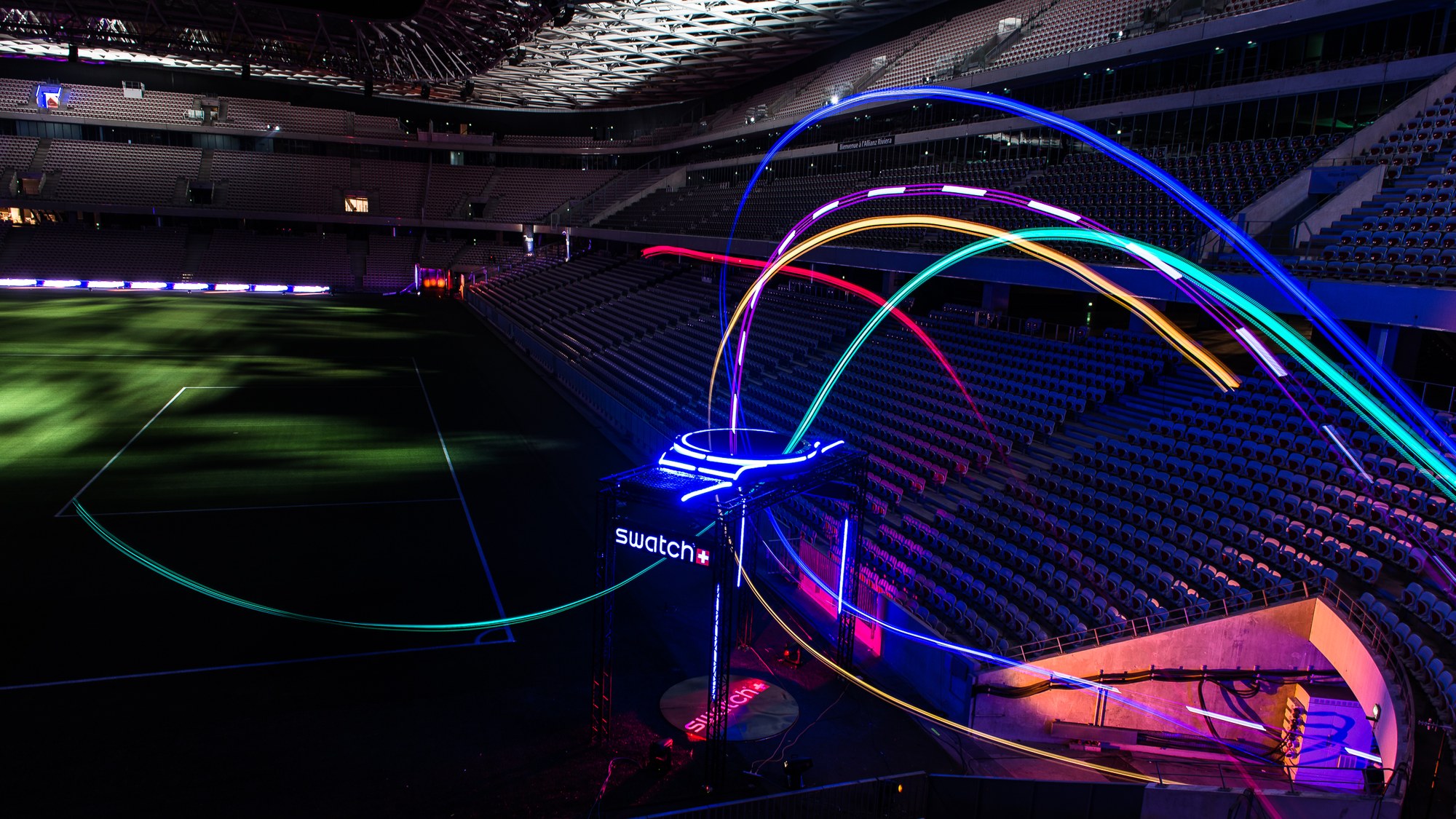

Anduril’s own site still says the physical round of the AI Grand Prix is the next stop. On September 25 the company’s X account said that round had already been held.
More than 3,000 teams registered. Ten are left. The post puts the final on December 11 at Arsenal-1 in Ohio, and it describes the week at headquarters as a recruiting event for people who can legally take a job. It names eight countries in the room: the United States, Japan, South Korea, Taiwan, the Netherlands, Estonia, Kazakhstan, and China. It does not name the ten teams.
Two dates are still published
Anduril and the Drone Champions League announced the series on January 27. Palmer Luckey’s line in that release is the pitch: “If you think you can build an autonomy stack that can out-fly the world’s best, show us.” The release schedules a live head-to-head race for November 2026 in Columbus, Ohio, with JobsOhio, and it ties the event to Arsenal-1, the manufacturing plant Anduril is building in central Ohio. The highest scorer, or one eligible member of the highest-scoring team, would skip the normal recruiting cycle and interview with hiring managers.
The FAQ on the race site still says the Ohio final is planned for November. It describes the physical qualifier as a two-week session in September 2026 in Southern California. The banner above that FAQ still reads “Next Stop: The Physical Qualifier” and tells readers to stay tuned. The September 25 post is later, and it is more specific. The qualifier happened at Anduril headquarters. The final is December 11 at Arsenal-1.
Both calendars are public at the same time. The rules page does not choose between them. Anduril can change or cancel the competition on its own.
The aircraft cannot be modified
Every team flies the same drone. Neros Technologies builds it. The Drone Champions League supplies an AI vector module on that platform. Hardware changes are banned. In a January 27 interview, TechCrunch reported Luckey’s reason for leaving Anduril’s own aircraft out of the field: they are too big for the course in Ohio.
The FAQ is the public description of what the software can see. In the virtual rounds the sensors are the usual ones on a first-person racing drone: an accelerometer, a gyroscope, and likely a reading of motor speed. There is no wind in the simulator. The first round is a short course with gates that are easy to pick out. The second uses a scanned place and a harder course. Qualifying is a time trial. Everyone runs the same course, and a time counts when the gates are passed.
On the physical aircraft the FAQ adds a battery reading as likely, and it says the camera is a single wide-angle sensor of about 12 megapixels. There is no lidar. Position is thin. A team may get a rough coordinate for the start of a virtual run. After that the aircraft has no fix on where it is, and it is not given a map of the track. Gate locations, if they are handed out at all, are rough. The code has to find the gates in the picture. The FAQ’s own estimate for the onboard computer is about 100 TOPS, with the exact module still listed as coming later, and it describes that board as more capable than a Raspberry Pi.
Python is the interface the FAQ names. Compiled extensions are expected to be allowed. A link over Wi-Fi or Bluetooth that lets a person fly the aircraft is a disqualification. The flight has to run on the drone.
The January release calls the Ohio finale head-to-head. The rules define the competition as getting through the course in the fastest time, and they give finalists time on the Ohio course to revise their code before race day. Both descriptions are still in print.
Teams keep their code. The founding partners may use a submission to run and judge the event while that team is still in, and that access ends by the close of the 2026 final. The rules say the code is not to be copied into systems the contest does not need. Open-source libraries have to be disclosed in writing. Generative tools have to be disclosed too, and the team has to stand behind the result under that access term.
The aircraft and the technical data can fall under U.S. export rules, ITAR or the Export Administration Regulations. If the organizer hands out a physical drone, it goes only to people allowed to receive one. The rules say the organizer has already decided that gap will not decide the contest, because the contest is the control software.
The job has a cash exit
The prize pool is $500,000, split among the highest-scoring teams in Ohio. The rules say that split will be written down before the physical qualifier. On September 26 the update is not on the rules page. The FAQ still says the top 10 teams at the Ohio race are guaranteed at least $5,000. Travel, housing, and the rest of the trip are on the team.
The job is one role for the 2026 season. The launch release describes an interview that skips the standard cycle. The rules describe an offer, and they attach conditions. The person has to be 18 or older. The role may require a U.S. security clearance and work from an Anduril office. Relocation may be required. Someone who is not a U.S. person is eligible only when a role the company calls business-critical is open in their country of citizenship.
If the winning team cannot take the job, or turns it down, the rules pay an extra $10,000 to each member, up to eight people. A minor on that team gets the $10,000, since a minor cannot take the job. The FAQ adds a separate screen: university teams that reach the California qualifier can be looked at there for internships and entry-level roles.
Employees of Anduril, the Drone Champions League, and Neros cannot enter. Citizens of Russia cannot compete and cannot attend. The rules tie that ban to U.S. export restrictions. The September 25 post includes China among the countries at headquarters. The written ban stops at Russia.
Sponsors skip the cut
Registration was free. A person could enter alone or on a team of up to eight, with no credential required. A parent registers anyone under 14. The homepage now says registration is closed and the virtual qualifier is finished.
The rules also give an automatic place in the physical qualifier to a team sponsored by a founding partner or by another sponsor. The founding partners are Anduril, the Drone Champions League, Neros, and JobsOhio. The September 25 post does not say whether any of the ten teams came in through that door.
Later seasons are described as annual, with races planned in Asia, the Middle East, and Europe. Only Anduril can broadcast this one. A competitor who wants to film it needs permission first.
The figure that moved this week is the field, from more than 3,000 registered teams down to 10. The figure that has not moved on the site is the month of the final.