Infra · September 25, 2026 · 6 min read
The Transporter-18 prototype checks launch shock and vacuum cooling. The claim that space solar beats ground solar stays untested.

What actually flies
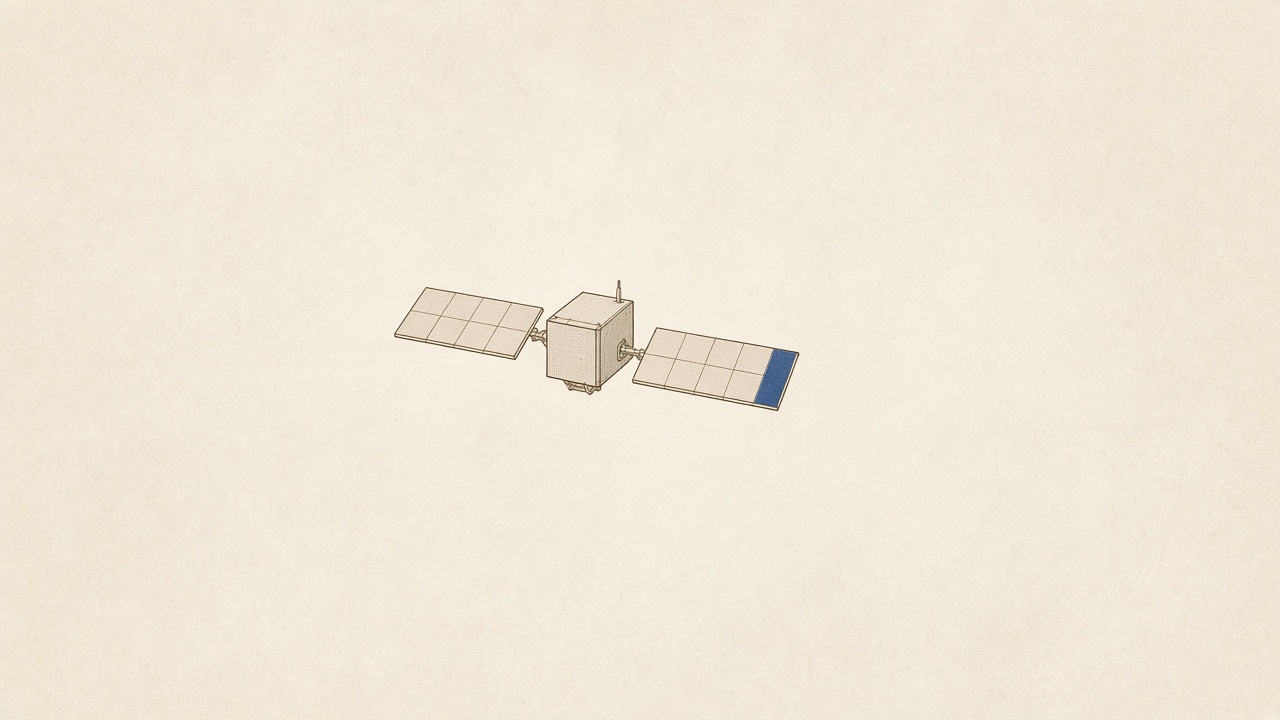
Google said on September 24 that a Planet-built prototype will ride SpaceX’s Transporter-18 rideshare so the company can watch Tensor Processing Units in low Earth orbit. Travis Beals, who leads Project Suncatcher, put the question in one line: can this hardware operate in space.
Already tested on the ground
The parts are Trillium, the datacenter generation Google already racks on the ground. Before the flight, the team shook the satellite on three axes. The rocket body sees about 10 g on the way up. A chip on a board can see 50 to 100 g. Google says the hardware held. They also ran Trillium under AI workloads in a proton beam at the Crocker Nuclear Laboratory at UC Davis, watching for bit flips. Google’s account of that test says the chips took a total ionizing dose higher than a five-year mission in orbit would deliver.
Fifteen minutes of heat
Heat is the measurement this flight can add. A TPU packs a lot of watts into a small die. On the ground that heat goes into air or water. In vacuum there is no airflow, so the only exit is a radiator. Google has been pairing heat pipes with radiators and has already run the stack in a thermal vacuum chamber. Ars Technica reported that the satellite, called MVP, is about the size of a refrigerator, carries four of the chips, and can keep them in operation for about fifteen minutes before they shut down and let the radiators catch up. Google plans to run Gemini in those windows.
What this flight leaves alone
Fifteen minutes is enough to see whether a workload still completes after a real launch. It is a poor stand-in for a training run, which lives for days, or for a service that has to answer the next request. Google’s later sketch puts dozens of TPUs on each satellite, flying in clusters. Every extra chip is more heat looking for the same kind of surface.
The power argument is from last year’s Suncatcher writeup, not from this launch. In the right low Earth orbit, Google says, panels see near-constant sun and could produce up to eight times the energy of panels on the ground. This prototype does not measure that yield. It also does not fly the laser links the cluster would need. That test is scheduled for 2027: two satellites, high bandwidth, short range. Space lasers today are built for the other job, low bandwidth across long range. Google compares the new problem to holding a coin-sized target from miles away while both ends move.
What October can falsify is narrower, which is why it is worth flying. The radiator design that survived a chamber has to survive a satellite that is moving and charging in real sunlight. The Trillium boards that survived the shaker have to survive a Falcon 9. Google’s own description of the first launch is a hunt for the failures the lab missed, before the 2027 pair.
Google does not state how long this satellite stays up. Ars Technica says a few months. A New York Times account, relayed by Space.com, says about a year.